Hydraulic Cylinder Final Inspection

Get An Instant Quote

Final Inspection Steps

Final inspection is the last check before hydraulic cylinders leave the factory. We recheck key dimensions and appearance, mark nameplates and keep test records, to make sure products are good and all information can be traced.

Worker measuring hydraulic cylinder stroke with tape measure, stroke calculation formula Stroke=B-A

1. Re-measurement of Stroke, Mounting Center Distance, Clevis Center Distance and Thread Dimensions

For the first step of the final inspection, we re-measure the cylinder stroke, mounting center distance, clevis center distance and thread dimensions. First, while the cylinder extends and retracts back and forth, we take readings of its fully extended length and fully retracted length. Then we compare these values against the stroke tolerance range on the drawing to make sure the actual stroke meets drawing requirements. After measuring the stroke, we recheck the mounting center distance with the cylinder retracted and the clevis center distance with the cylinder fully extended. We also check the clevis pin hole diameter and the concentricity between the clevis pin hole and cylinder centerline. We make sure all dimensions match the drawing, so customers achieve precise alignment during on-site installation and avoid assembly jamming. After we finish checking the center distances, We use thread go and no-go gauges to check if the threads screw in properly, which lets us find any defects on the thread form.
corresponding steel heat number.

We record all measured values and compare them with drawing requirements to determine if each item passes or fails one by one. If any critical dimension is outside the drawing tolerance, we arrange rework or scrap the cylinder. For passed units, we keep complete test records rather than only marking them as qualified.

2. Visual Inspection of Paint Coating and Chrome-Plated Surface
For the second step of the final inspection, we do visual checks on cylinders. Paint coating and the chrome-plated surface of the piston rod are the focuses. The purpose is to avoid cosmetic defects that affect corrosion resistance or assembly. First, we check the paint on the cylinder’s external parts: tubes, end caps and clevis. We will make sure the paint color matches the customer-approved paint sample. The coating thickness should meet required thickness, and there should not be runs, bubbles, pinholes, dents and chipped paint. Coating quality is controlled according to ISO 12944, that is the international standard for steel structure anti-corrosion coatings or any other standards we agreed with customers. Our coating meets the C5-M marine heavy corrosion protection class for cylinders in marine or offshore use. This is a high-grade anti-corrosion standard that resists harsh corrosive environments like salt spray and high humidity.

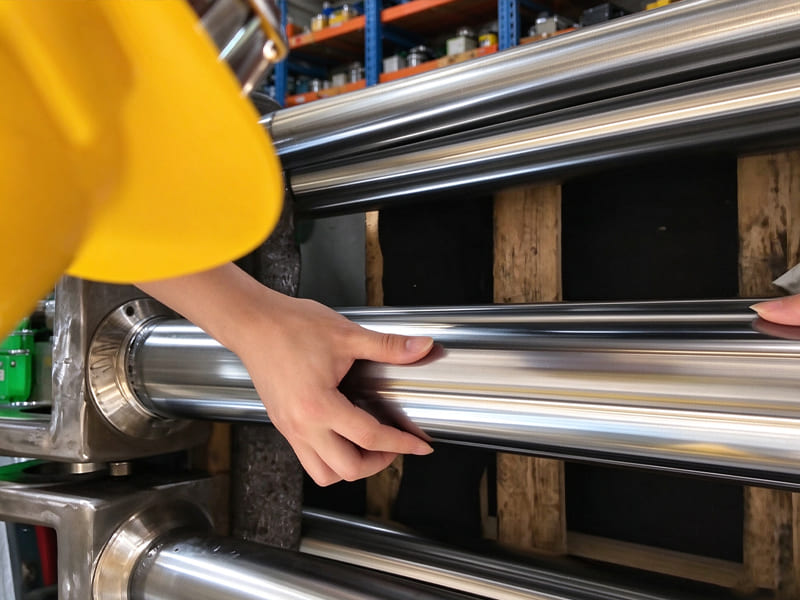
Chrome-plated surface of the piston rod is the most important part. The piston rod cannot have pinholes, peeling or exposed base metal, even slightest scratches are not allowed. These flaws will cut the seals after assembly and lead to oil leakage. After checking the chrome surface, we also fully inspect the cylinder’s sealing faces, oil ports and threaded holes. No paint overspray spots, paint lumps or rust on these areas are allowed. We do the inspections with lighting, by visual inspection and by hand feel. We use a magnifying glass to check tiny details. If any part fails inspection, we arrange rework or dispose the cylinder.

Polished chrome piston rods for hydraulic cylinders, smooth surface inspection in workshop
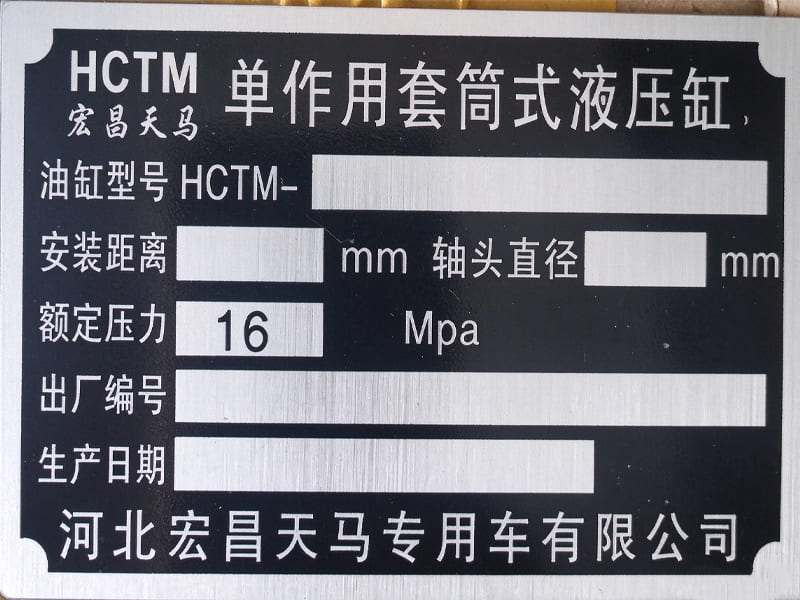
HCTM single acting telescopic hydraulic cylinder metal nameplate, rated pressure 16MPa

3. Nameplate Marking

For the third step of the final inspection, we carry out nameplate marking. The nameplate is an identification plate mounted on the outer surface of the cylinder barrel, usually made of stainless steel or aluminum. We use laser etching to mark cylinder details onto the plate, this details includes the model, rated pressure, stroke, serial number, and date of manufacture. We pay special attention to marking quality. Markings must stay clear and are never handwritten or be changed. After marking, we rivet the nameplate to a smooth and weld-free spot on the barrel, away from anything that might way from interference, so it stays tight and won’t lift or fall off. Each cylinder has its own serial number. This number links to all its test records, including pressure testing, flaw detection, material data and cleanliness checks. If problems occur, we can quickly find the original inspection data.

4. Technical Document Filing

After we finish fitting the nameplate, we move to the final step of final inspection: sorting and filing all technical records.

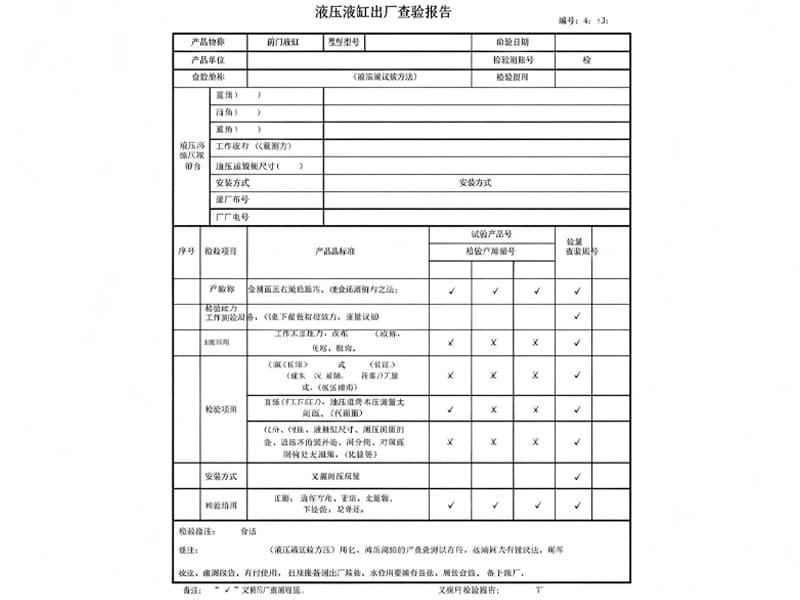
The full file includes material MTC, UT/MT non-destructive test reports, hardness test results, cleanliness records, chrome plating / HVOF coating records, assembly torque logs, pressure test curves and this final inspection report. For marine cylinders, we also add the marine certificate into the file. All these inspection records are kept together by Hydroforce.We check every document carefully, to make sure each record matches the cylinder’s unique serial number. We keep both paper originals and electronic backups, and follow the customer’s or classification society’s retention rules. The main purpose of this file is backward tracking. If quality issues come up later, it can start from the finished cylinder and work back through pressure test data, assembly records, seal batch numbers, and even the heat number of the raw material. This lets us rebuild the full production history of the product. We also prepare separate documents to send to the customer with the cylinder: certificate of conformity, operation manual, packing list and pressure test report. If documents are incomplete, we cannot release the cylinder.

Printed factory test report for hydraulic cylinders, inspection items and test record sheet

Leveraging our full in‑house manufacturing capacity, we are ready to develop custom hydraulic cylinder solutions for your project. Please get in touch with us today.

Get Free Quote Today!

You'll receive a comprehensive Technical Quote Package, including:

Send Your Inquiry Today