
Hydraulic Cylinder Testing
Get An Instant Quote
Pressure Test Steps
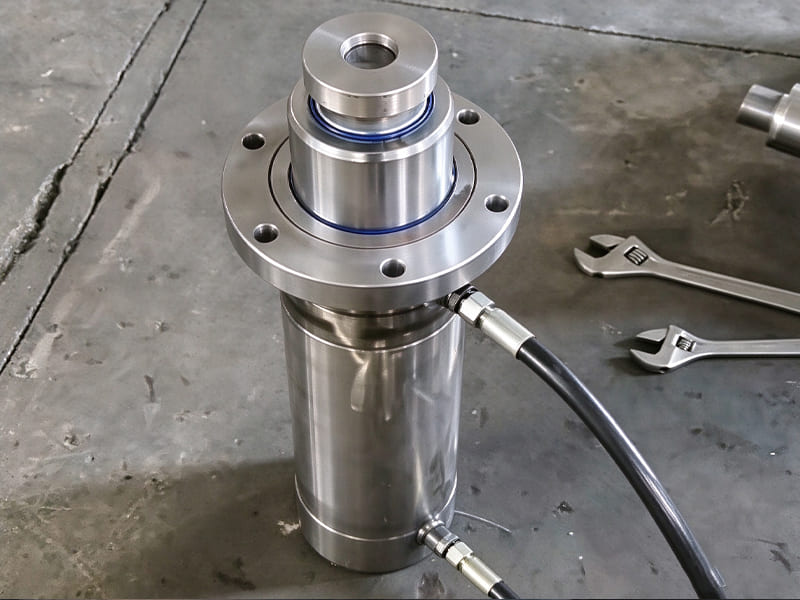
1. Low-pressure No-load Air Venting
2.Low-pressure Hold Test
Once low-pressure no-load venting is complete, we move to the low-pressure hold verification. This test checks whether the piston rod extends and retracts smoothly. We set the pressure at 0.5–1.5 MPa and let the cylinder fully extend and retract 2 to 3 times. At this point, we mainly check the breakaway pressure. This is the lowest oil pressure needed to push the stationary piston rod out. If we see it running high, we stop and take a look. That tells us there's too much friction inside the cylinder. Most of the time, that's because the seals are too tight or the parts aren't lined up right. When the cylinder moves back and forth at low pressure, we also check the piston rod for sticking, jitter, creeping, odd noises.
When the movement test is done, we hold the same pressure for 1 to 2 minutes. Then we inspect every connection point such as cylinder wall, cylinder head, oil port fittings for oil seepage or leakage. If the test doesn't pass, we go through everything one by one. We first look for damage on the seals. Then we check the concentricity between piston rod and cylinder barrel, to make sure the rod is not fitted off-center. Once we find the root cause, we fix it and run the test again.
3. High-pressure Strength Test
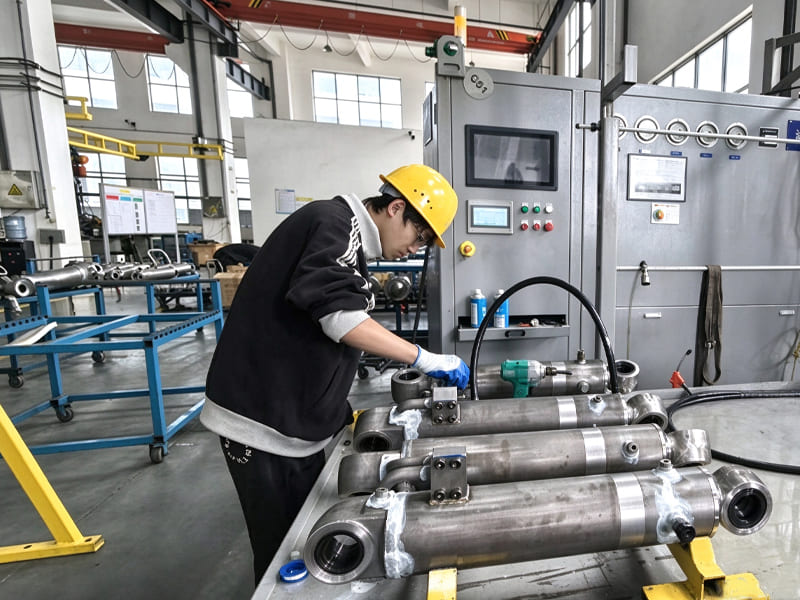
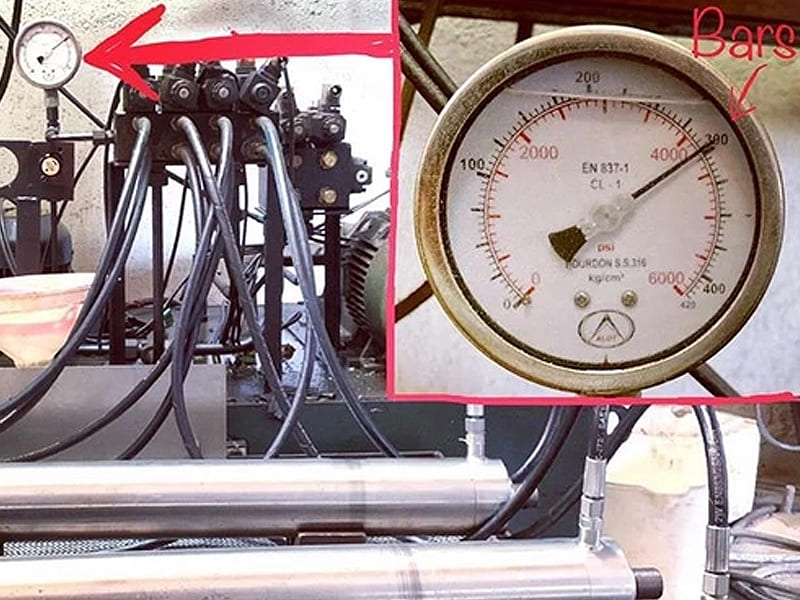
After passing the low-pressure hold test, we move on to the high-pressure strength test which is 1.5 times the rated pressure. The purpose of this test is to check the structural strength of the cylinder parts and make sure they won't get damaged under high pressure. First, we increase pressure to the set value slowly. This is critical, because sudden pressure spikes will damage the cylinder from impact. Once we hit the target pressure, we hold for a minimum of 2 minutes on standard products. For marine cylinders, we follow the drawing requirements and can hold up to 5 minutes. At this point, we check key spots like welds, cylinder barrel, cylinder bottom, cylinder head, oil ports, fittings and tie rods. This is to find out if there is any oil leak.
High pressure test is risky, we use remote control through the whole pressure test. We also fit a protective guard around the cylinder before test to keep our operators safe. At the same time, we collect pressure data and keep records of the pressure-time curve. Our test standard requires no visible oil leaks. It also means that the cylinder must not have permanent deformation or burst. If we see any of these problems, we stop right away. We will not move forward until all issues are fixed. That is a hard requirement.
4.Rated Pressure Hold Test
Once the high-pressure strength test passes, we move on to the fourth step of pressure testing: the rated pressure hold test. This step checks internal leakage at the piston and tells us whether the cylinder seals work properly. We will raise the pressure to the cylinder's rated pressure and hold it for at least 1 to 2 minutes. We test the rod-side chamber and rodless chamber separately, because the two chambers carry different loads and have different sealing conditions.
There are two ways we check for internal leakage. One is to watch for piston rod movement. If oil is creeping from one chamber to the other, the rod will start to drift slowly. The other is use measuring cup to collect leaking. We measure the oil volume and compare it against standard to judge if leakage is passes. In practice, we use stricter internal leakage limits for high-grade engineering and marine cylinders than standard cylinders. For example, standard cylinders allow up to 0.5 mL/min leakage, but marine and high-grade ones must stay under 0.1 mL/min as required by drawings. If leakage goes over maximum allowed in the drawing, we will take the cylinder apart, replace the seals and do the test again. During the test, we note pressure drop, leakage volume, oil temperature and seal batch numbers. We keep these test data so we can check product quality when needed.

5. Comprehensive Operating Check
Leveraging our full in‑house manufacturing capacity, we are ready to develop custom hydraulic cylinder solutions for your project. Please get in touch with us today.