
Hydraulic Cylinder Surface Treatment
Get An Instant QuoteAppropriate Surface Treatment for Your Applications
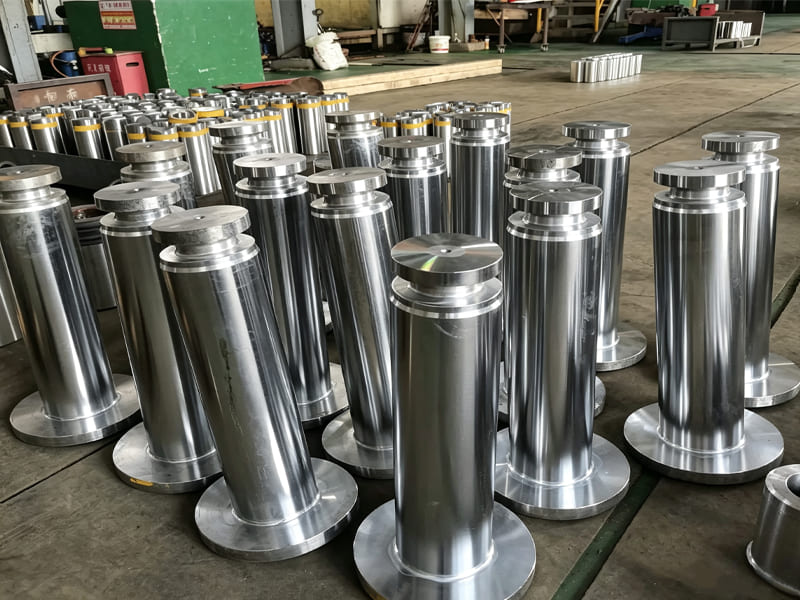
1. Piston Rod Surface Treatment
For piston rod surface treatment, the first step is hard chrome plating. We use this process to improve the rod’s wear resistance and rust protection. It’s important to keep in mind that a thicker chrome layer is not always better. An overly thick coating builds up high internal stress, raising the risk of cracking and peeling. So we select the thickness according to actual operating conditions, balancing wear and corrosion resistance alongside coating stability: For light-duty service, we use 0.03 to 0.05 mm. This thickness handles regular wear well and keeps costs in check. For heavy-duty engineering work, we use 0.05 to 0.08 mm. The thicker coating stands up to continuous impact and abrasive wear. For harsh settings like marine and sand-and-gravel applications, we apply 0.08 to 0.10 mm. After plating, the chrome layer reaches HV 800-1000. It bonds well and won’t peel or flake off. On every rod, we check coating thickness at a minimum offive points, covering the rod head, shaft and tail. We also do a full visual check. If any rod fails inspection, we remove the entire coating and re-plate it. We never do partial chrome touch-up. Patched spots have weak coating adhesion, so the coating may chip off when the piston rod cycles back and forth under load.
Besides, when working conditions such as marine and sand-and-gravel service require higher protection, we have an upgraded alternative. We recommend HVOF spraying first. We often use this process on marine cylinders to build a protective tungsten carbide cermet coating on piston rods. It resists sand particle erosion and seawater corrosion. When we apply the coating, we spray tungsten carbide cermet powder at high velocity so it deposits onto the rod surface. After we form the coating, we control its thickness from 0.10 to 0.25 mm. The coating bonds firmly to the piston rod substrate, with bond strength of at least 70 MPa. Its hardness reaches HV 1000-1300 and delivers much better wear resistance.
As the second step of piston rod surface treatment, we polish the sealing mating area. We control surface roughness within Ra 0.2 μm, making the piston rod surface smooth enough so the seal lip fits tightly against the rod surface. In this way, hydraulic oil can hardly pass through tiny gaps on the contact surface, which reduces internal leakage of the cylinder. After we finish polishing, we do a full inspection with magnifiers. We look for defects such as pinholes, peeling, cracks and exposed base metal. If we find any piston rod that does not pass inspection, we also remove the entire coating and re-plate it.
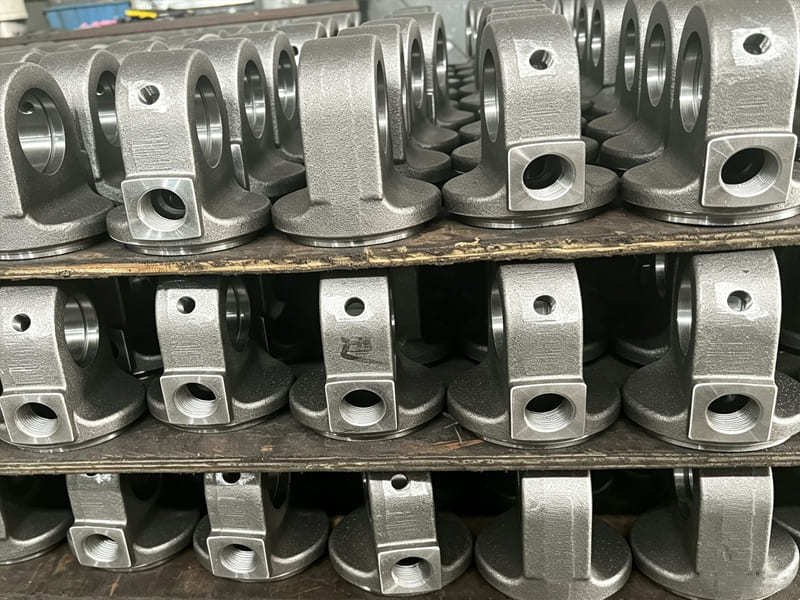
2. Surface Treatment for External Components: Cylinder Barrels, End Caps and Lugs
Leveraging our full in‑house manufacturing capacity, we are ready to develop custom hydraulic cylinder solutions for your project. Please get in touch with us today.